Crop duty — canola and rapeseed straw baling
Prevent canola and rapeseed residue plugging by managing branchy stems, windrow shape, pickup engagement, rotor load, foreign material and safe unplugging.
Application choices should follow crop behavior and downstream use. For canola and rapeseed straw baling, start with canola straw; cross-check rapeseed straw; then verify branchy stems. Those three observations prevent a single attractive feature or symptom from controlling the whole decision.
The exact canola and rapeseed straw baling limit can depend on machine model, crop, region, or operating configuration. Check the baler manual for values tied to rotor load. Ask the supplier for written data tied to plugging. Use field evidence for canola straw. This separation keeps documented facts distinct from assumptions.
Application controls for canola and rapeseed straw baling
Canola Straw
Expect irregular, branchy stems that can interlock at the pickup or throat. Windrows should be consolidated without creating dense knots. Link canola straw with rapeseed straw during the first field check for canola and rapeseed straw baling.
Rapeseed Straw
Inspect pickup side bands and throat edges where branchy crop can hang and start a bridge. Link rapeseed straw with branchy stems during the first field check for canola and rapeseed straw baling.
Branchy Stems
Listen for changing feeder load. A rising rumble or repeated driveline protection events indicate the crop stream is not uniform. Link branchy stems with rotor load during the first field check for canola and rapeseed straw baling.
Expect irregular, branchy stems that can interlock at the pickup or throat. Windrows should be consolidated without creating dense knots. For canola and rapeseed straw baling, inspect canola straw beside rapeseed straw. Record rotor load during that same pass. The “Bridge at pickup” condition matters: Crop hangs across side or throat. Use the action “Stop and inspect tooth/stripper condition” as the next check, not as an automatic setting. A misleading shortcut is bypassing driveline protection to push through a plug. Test that shortcut against canola straw before accepting it. Inspect pickup side bands and throat edges where branchy crop can hang and start a bridge. Recheck rapeseed straw after the correction. Keep rotor load in the same record so crop change does not masquerade as machine improvement.
Listen for changing feeder load. A rising rumble or repeated driveline protection events indicate the crop stream is not uniform. The canola and rapeseed straw baling test should connect rotor load, plugging, and rapeseed straw. Measure or inspect rotor load first. Then compare plugging under the same crop load. For “Bridge at pickup,” the field meaning is crop hangs across side or throat. The practical response is “Stop and inspect tooth/stripper condition.” Avoid restarting without identifying why the plug formed, because it can change the symptom without proving the cause. Reduce ground speed before the plug forms. Once the intake is packed solid, forcing the clutch or driveline protection to cycle can create heat and wear. When the next bale is complete, review rapeseed straw. A repeatable result should show the same direction on another representative pass.
Inspect pickup side bands and throat edges where branchy crop can hang and start a bridge. The canola and rapeseed straw baling test should connect branchy stems, rotor load, and canola straw. Measure or inspect branchy stems first. Then compare rotor load under the same crop load. For “Recurring plug,” the field meaning is same field zone or crop condition. The practical response is “Record moisture and windrow mass.” Avoid ignoring bent pickup teeth that snag stems, because it can change the symptom without proving the cause. Listen for changing feeder load. A rising rumble or repeated driveline protection events indicate the crop stream is not uniform. When the next bale is complete, review canola straw. A repeatable result should show the same direction on another representative pass.
Reduce ground speed before the plug forms. Once the intake is packed solid, forcing the clutch or driveline protection to cycle can create heat and wear. Use canola straw as evidence for canola and rapeseed straw baling; use rapeseed straw as a cross-check. Add rotor load so the record contains crop, machine, and output information. The row “Recurring plug” describes a useful boundary because same field zone or crop condition. Follow “Record moisture and windrow mass” only after that boundary is observed. Do not rely on reaching into the throat before all motion and stored energy are isolated. If the baler has a drop floor, reversible rotor or controlled unplugging sequence, follow the manual exactly and keep people clear of stored energy. If canola straw improves while rapeseed straw worsens, the adjustment has shifted the problem. Repeat the check before increasing production pace.
Measurement record for canola and rapeseed straw baling
- canola straw
- Record canola straw for canola and rapeseed straw baling. Pair it with “Bridge at pickup,” where crop hangs across side or throat. The related verification is: Reduce ground speed before the plug forms. Once the intake is packed solid, forcing the clutch or driveline protection to cycle can create heat and wear.
- rapeseed straw
- Record rapeseed straw for canola and rapeseed straw baling. Pair it with “Rotor overload,” where repeated clutch or protection events. The related verification is: If the baler has a drop floor, reversible rotor or controlled unplugging sequence, follow the manual exactly and keep people clear of stored energy.
- branchy stems
- Record branchy stems for canola and rapeseed straw baling. Pair it with “Recurring plug,” where same field zone or crop condition. The related verification is: After clearing, identify the cause: windrow knot, bent pickup tooth, foreign object, crop moisture or feeder obstruction. Do not simply resume at the same settings.
- rotor load
- Record rotor load for canola and rapeseed straw baling. Pair it with “Bridge at pickup,” where crop hangs across side or throat. The related verification is: Expect irregular, branchy stems that can interlock at the pickup or throat. Windrows should be consolidated without creating dense knots.
- plugging
- Record plugging for canola and rapeseed straw baling. Pair it with “Rotor overload,” where repeated clutch or protection events. The related verification is: Inspect pickup side bands and throat edges where branchy crop can hang and start a bridge.
Decision matrix for canola and rapeseed straw baling
| Condition | Meaning | Verification action |
|---|---|---|
| Bridge at pickup | Crop hangs across side or throat | Stop and inspect tooth/stripper condition; Improve windrow alignment |
| Rotor overload | Repeated clutch or protection events | Reduce feed rate and inspect obstruction; Do not defeat protection system |
| Recurring plug | Same field zone or crop condition | Record moisture and windrow mass; Change process, not only restart |
| Release | Accept the canola and rapeseed straw baling result when canola straw, rapeseed straw, and branchy stems support the same conclusion. | |
Six-step field sequence for canola and rapeseed straw baling
- Step 1 — Baseline. Expect irregular, branchy stems that can interlock at the pickup or throat. Windrows should be consolidated without creating dense knots. Write canola straw for canola and rapeseed straw baling. Add crop condition and branchy stems. Keep this record before adjustments.
- Step 2 — Locate. Inspect pickup side bands and throat edges where branchy crop can hang and start a bridge. Find the component or field point tied to rapeseed straw. Compare it with “Rotor overload,” because repeated clutch or protection events.
- Step 3 — Measure. Listen for changing feeder load. A rising rumble or repeated driveline protection events indicate the crop stream is not uniform. Use a suitable measurement or inspection for branchy stems. Keep plugging in the same pass so the comparison stays valid.
- Step 4 — Test. Reduce ground speed before the plug forms. Once the intake is packed solid, forcing the clutch or driveline protection to cycle can create heat and wear. Make one canola and rapeseed straw baling change tied to rotor load. Do not combine it with restarting without identifying why the plug formed. Observe the next bale.
- Step 5 — Correct. If the baler has a drop floor, reversible rotor or controlled unplugging sequence, follow the manual exactly and keep people clear of stored energy. Apply “Reduce feed rate and inspect obstruction” when the evidence supports it. Recheck rapeseed straw; keep other settings unchanged when practical.
- Step 6 — Release. After clearing, identify the cause: windrow knot, bent pickup tooth, foreign object, crop moisture or feeder obstruction. Do not simply resume at the same settings. Release canola and rapeseed straw baling to normal work only after canola straw and branchy stems agree with the finished result. Save the record.
Worked example for canola and rapeseed straw baling
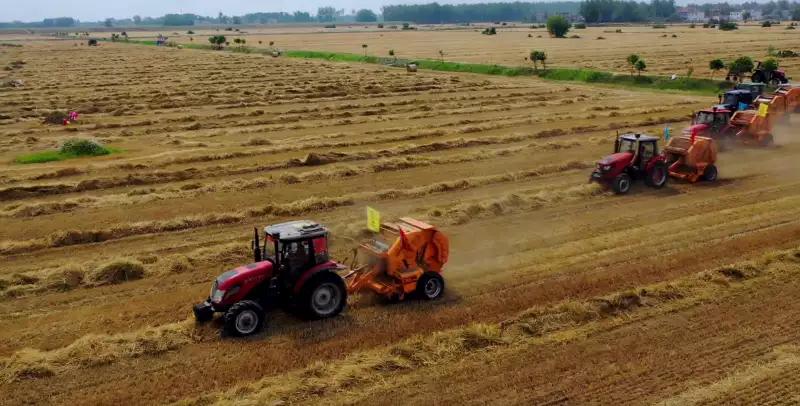
A branchy windrow can look moderate by height but still contain intertwined stems that enter as one mat. Slowing before the pickup reaches these knots is more effective than trying to force the feeder through after torque rises. In the canola and rapeseed straw baling record, place canola straw beside rapeseed straw. Add the observed result for branchy stems. Mark any moisture, yield, temperature, windrow, or operator change that occurred during the test; otherwise a crop change can be mistaken for a machine effect.
Errors that can mislead canola and rapeseed straw baling
- Bypassing driveline protection to push through a plug. Check canola straw before accepting that explanation for canola and rapeseed straw baling. Compare rapeseed straw on the next pass. Use this counter-evidence: Listen for changing feeder load. A rising rumble or repeated driveline protection events indicate the crop stream is not uniform.
- Reaching into the throat before all motion and stored energy are isolated. Check rapeseed straw before accepting that explanation for canola and rapeseed straw baling. Compare branchy stems on the next pass. Use this counter-evidence: Reduce ground speed before the plug forms. Once the intake is packed solid, forcing the clutch or driveline protection to cycle can create heat and wear.
- Ignoring bent pickup teeth that snag stems. Check branchy stems before accepting that explanation for canola and rapeseed straw baling. Compare rotor load on the next pass. Use this counter-evidence: If the baler has a drop floor, reversible rotor or controlled unplugging sequence, follow the manual exactly and keep people clear of stored energy.
- Restarting without identifying why the plug formed. Check rotor load before accepting that explanation for canola and rapeseed straw baling. Compare plugging on the next pass. Use this counter-evidence: After clearing, identify the cause: windrow knot, bent pickup tooth, foreign object, crop moisture or feeder obstruction. Do not simply resume at the same settings.
Frequently asked questions on canola and rapeseed straw baling
Why does canola straw bridge at the throat?
Branchy stems can interlock across narrow transitions, especially when windrows contain knots or the pickup presents crop unevenly. Inspect geometry and crop flow. For canola and rapeseed straw baling, verify numeric limits affecting branchy stems in the exact machine manual or written supplier specification.
Will a larger tractor stop plugging?
Extra power cannot fix a blocked or poorly fed throat. It may only increase stress. Correct windrow, feeder condition and travel speed first. For canola and rapeseed straw baling, verify numeric limits affecting rotor load in the exact machine manual or written supplier specification.
What is the safest way to clear a plug?
Use the machine-specific unplugging system if provided, stop the tractor, disengage PTO, isolate hydraulic or mechanical stored energy and follow the manufacturer’s lockout instructions before manual work. For canola and rapeseed straw baling, verify numeric limits affecting plugging in the exact machine manual or written supplier specification.
Field confirmation for canola and rapeseed straw baling
Finish the canola and rapeseed straw baling decision with a short evidence chain. Record canola straw. Cross-check rapeseed straw. Confirm the outcome through branchy stems. If those observations conflict, return to rotor load before raising speed, density, workload, or purchase commitment. If the unresolved item is model-specific, request the documented value for plugging instead of estimating it.