Condition inspection — pre-season hay baler maintenance checklist
Prepare a baler before harvest with a structured inspection of pickup, feeder, PTO driveline, chamber, bearings, binding system, hydraulics, tires, guards and controls.
Maintenance should respond to condition evidence and known failure consequence. For pre-season hay baler maintenance checklist, start with pre-season inspection; cross-check pickup teeth; then verify PTO driveline. Those three observations prevent a single attractive feature or symptom from controlling the whole decision.
The exact pre-season hay baler maintenance checklist limit can depend on machine model, crop, region, or operating configuration. Check the baler manual for values tied to chamber components. Ask the supplier for written data tied to wrapping system. Use field evidence for pre-season inspection. This separation keeps documented facts distinct from assumptions.
Service priorities for pre-season hay baler maintenance checklist
Pre-Season Inspection
Clean the machine thoroughly enough to expose cracks, loose hardware, worn guides and leaks. Pre-season maintenance begins with visibility, not with adding grease over last season dust. Link pre-season inspection with pickup teeth during the first field check for pre-season hay baler maintenance checklist.
Pickup Teeth
Inspect pickup teeth, bands, gauge wheels, cam-track components and feeder tines. Replace damaged parts that would create a known field-loss stripe or unstable crop transfer. Link pickup teeth with PTO driveline during the first field check for pre-season hay baler maintenance checklist.
Pto Driveline
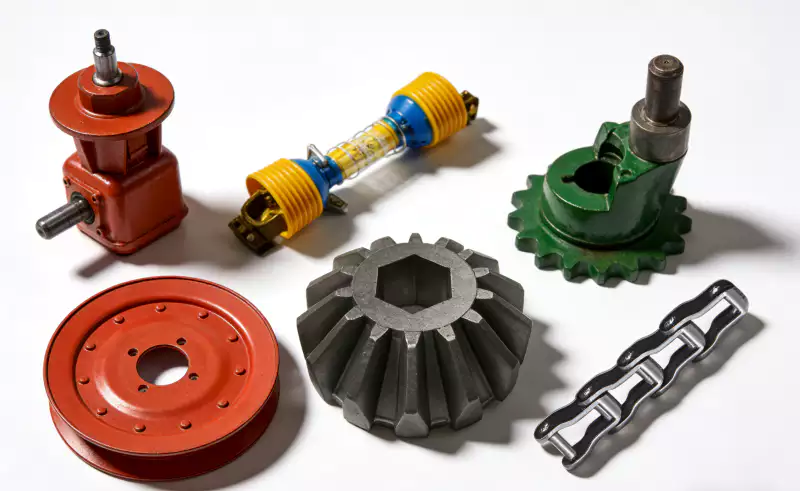
Inspect the PTO shaft, shields, universal joints, overrunning or protection devices and driveline supports as specified in the machine manual. All guarding must be complete before testing. Link PTO driveline with chamber components during the first field check for pre-season hay baler maintenance checklist.
Clean the machine thoroughly enough to expose cracks, loose hardware, worn guides and leaks. Pre-season maintenance begins with visibility, not with adding grease over last season dust. The pre-season hay baler maintenance checklist test should connect pickup teeth, PTO driveline, and wrapping system. Measure or inspect pickup teeth first. Then compare PTO driveline under the same crop load. For “Drive and chamber,” the field meaning is pto, guards, chains, belts, rollers, bearings. The practical response is “Find wear under controlled shop conditions.” Avoid ignoring a damaged pto guard because the shaft itself turns smoothly, because it can change the symptom without proving the cause. Inspect pickup teeth, bands, gauge wheels, cam-track components and feeder tines. Replace damaged parts that would create a known field-loss stripe or unstable crop transfer. When the next bale is complete, review wrapping system. A repeatable result should show the same direction on another representative pass.
Inspect the PTO shaft, shields, universal joints, overrunning or protection devices and driveline supports as specified in the machine manual. All guarding must be complete before testing. Use wrapping system as evidence for pre-season hay baler maintenance checklist; use pre-season inspection as a cross-check. Add PTO driveline so the record contains crop, machine, and output information. The row “Drive and chamber” describes a useful boundary because pto, guards, chains, belts, rollers, bearings. Follow “Find wear under controlled shop conditions” only after that boundary is observed. Do not rely on greasing without first cleaning and inspecting the machine. Check chamber components: belts and splices or rollers and chains, bearings, tension mechanisms, scrapers and tailgate latches as applicable to the baler type. If wrapping system improves while pre-season inspection worsens, the adjustment has shifted the problem. Repeat the check before increasing production pace.
Inspect pickup teeth, bands, gauge wheels, cam-track components and feeder tines. Replace damaged parts that would create a known field-loss stripe or unstable crop transfer. Use chamber components as evidence for pre-season hay baler maintenance checklist; use wrapping system as a cross-check. Add pickup teeth so the record contains crop, machine, and output information. The row “Pickup and feeder” describes a useful boundary because teeth, bands, tines, guides, gauge wheels. Follow “Restores clean crop transfer” only after that boundary is observed. Do not rely on leaving weather-cracked hydraulic hoses for harvest because they are not yet leaking. Inspect the PTO shaft, shields, universal joints, overrunning or protection devices and driveline supports as specified in the machine manual. All guarding must be complete before testing. If chamber components improves while wrapping system worsens, the adjustment has shifted the problem. Repeat the check before increasing production pace.
Check chamber components: belts and splices or rollers and chains, bearings, tension mechanisms, scrapers and tailgate latches as applicable to the baler type. A controlled pre-season hay baler maintenance checklist review starts at pickup teeth. Compare it with PTO driveline; then document wrapping system. Under “Pickup and feeder,” teeth, bands, tines, guides, gauge wheels. That evidence supports the action “Restores clean crop transfer.” One poor diagnostic path is waiting for the first crop to test the wrapping or knotting system. Challenge that assumption with pickup teeth, not with guesswork. Load and test the net or twine system. Verify routing, feed, cut or knot action and sensors before crop is ready, because binding faults can stop an otherwise healthy baler. Confirm the finished result through PTO driveline. If field conditions changed, note the change beside wrapping system and run another comparable pass.
Measurement record for pre-season hay baler maintenance checklist
- pre-season inspection
- Record pre-season inspection for pre-season hay baler maintenance checklist. Pair it with “Pickup and feeder,” where teeth, bands, tines, guides, gauge wheels. The related verification is: Check chamber components: belts and splices or rollers and chains, bearings, tension mechanisms, scrapers and tailgate latches as applicable to the baler type.
- pickup teeth
- Record pickup teeth for pre-season hay baler maintenance checklist. Pair it with “Drive and chamber,” where pto, guards, chains, belts, rollers, bearings. The related verification is: Load and test the net or twine system. Verify routing, feed, cut or knot action and sensors before crop is ready, because binding faults can stop an otherwise healthy baler.
- PTO driveline
- Record PTO driveline for pre-season hay baler maintenance checklist. Pair it with “Wrap or bind,” where net/twine routing, feed, knife/knotter, sensors. The related verification is: Finish with hydraulic hoses, electrical connectors, tires, wheel hardware, lights, safety decals, fire extinguisher and a controlled no-load or service test as the manufacturer permits.
- chamber components
- Record chamber components for pre-season hay baler maintenance checklist. Pair it with “Pickup and feeder,” where teeth, bands, tines, guides, gauge wheels. The related verification is: Clean the machine thoroughly enough to expose cracks, loose hardware, worn guides and leaks. Pre-season maintenance begins with visibility, not with adding grease over last season dust.
- wrapping system
- Record wrapping system for pre-season hay baler maintenance checklist. Pair it with “Drive and chamber,” where pto, guards, chains, belts, rollers, bearings. The related verification is: Inspect pickup teeth, bands, gauge wheels, cam-track components and feeder tines. Replace damaged parts that would create a known field-loss stripe or unstable crop transfer.
Decision matrix for pre-season hay baler maintenance checklist
| Condition | Meaning | Verification action |
|---|---|---|
| Pickup and feeder | Teeth, bands, tines, guides, gauge wheels | Restores clean crop transfer; Repair known damage before first field |
| Drive and chamber | PTO, guards, chains, belts, rollers, bearings | Find wear under controlled shop conditions; Use manual service criteria |
| Wrap or bind | Net/twine routing, feed, knife/knotter, sensors | Confirms bale can be finished; Test before harvest window |
| Release | Accept the pre-season hay baler maintenance checklist result when pre-season inspection, pickup teeth, and PTO driveline support the same conclusion. | |
Six-step field sequence for pre-season hay baler maintenance checklist
- Step 1 — Baseline. Clean the machine thoroughly enough to expose cracks, loose hardware, worn guides and leaks. Pre-season maintenance begins with visibility, not with adding grease over last season dust. Write pre-season inspection for pre-season hay baler maintenance checklist. Add crop condition and PTO driveline. Keep this record before adjustments.
- Step 2 — Locate. Inspect pickup teeth, bands, gauge wheels, cam-track components and feeder tines. Replace damaged parts that would create a known field-loss stripe or unstable crop transfer. Find the component or field point tied to pickup teeth. Compare it with “Drive and chamber,” because pto, guards, chains, belts, rollers, bearings.
- Step 3 — Measure. Inspect the PTO shaft, shields, universal joints, overrunning or protection devices and driveline supports as specified in the machine manual. All guarding must be complete before testing. Use a suitable measurement or inspection for PTO driveline. Keep wrapping system in the same pass so the comparison stays valid.
- Step 4 — Test. Check chamber components: belts and splices or rollers and chains, bearings, tension mechanisms, scrapers and tailgate latches as applicable to the baler type. Make one pre-season hay baler maintenance checklist change tied to chamber components. Do not combine it with leaving weather-cracked hydraulic hoses for harvest because they are not yet leaking. Observe the next bale.
- Step 5 — Correct. Load and test the net or twine system. Verify routing, feed, cut or knot action and sensors before crop is ready, because binding faults can stop an otherwise healthy baler. Apply “Find wear under controlled shop conditions” when the evidence supports it. Recheck pickup teeth; keep other settings unchanged when practical.
- Step 6 — Release. Finish with hydraulic hoses, electrical connectors, tires, wheel hardware, lights, safety decals, fire extinguisher and a controlled no-load or service test as the manufacturer permits. Release pre-season hay baler maintenance checklist to normal work only after pre-season inspection and PTO driveline agree with the finished result. Save the record.
Worked example for pre-season hay baler maintenance checklist
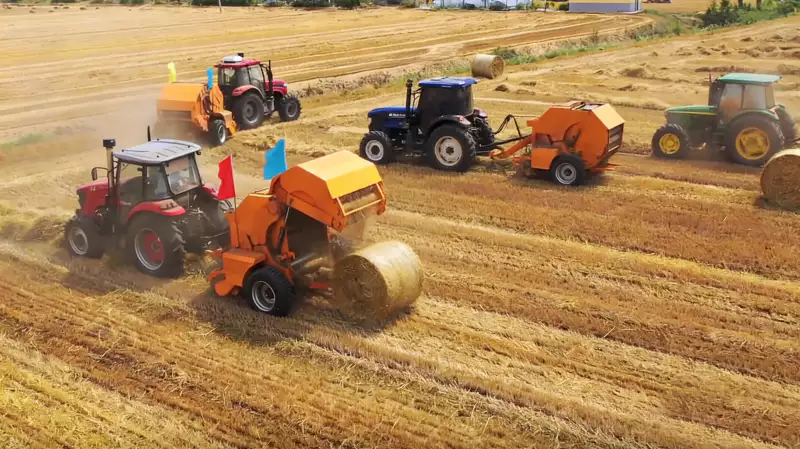
A cracked pickup bracket is easy to see on a clean machine in the workshop but becomes hidden by crop on the first harvest day. Repairing it before season start avoids both a pickup failure and secondary tooth damage in the field. In the pre-season hay baler maintenance checklist record, place pre-season inspection beside pickup teeth. Add the observed result for PTO driveline. Mark any moisture, yield, temperature, windrow, or operator change that occurred during the test; otherwise a crop change can be mistaken for a machine effect.
Errors that can mislead pre-season hay baler maintenance checklist
- Greasing without first cleaning and inspecting the machine. Check pre-season inspection before accepting that explanation for pre-season hay baler maintenance checklist. Compare pickup teeth on the next pass. Use this counter-evidence: Inspect the PTO shaft, shields, universal joints, overrunning or protection devices and driveline supports as specified in the machine manual. All guarding must be complete before testing.
- Ignoring a damaged PTO guard because the shaft itself turns smoothly. Check pickup teeth before accepting that explanation for pre-season hay baler maintenance checklist. Compare PTO driveline on the next pass. Use this counter-evidence: Check chamber components: belts and splices or rollers and chains, bearings, tension mechanisms, scrapers and tailgate latches as applicable to the baler type.
- Waiting for the first crop to test the wrapping or knotting system. Check PTO driveline before accepting that explanation for pre-season hay baler maintenance checklist. Compare chamber components on the next pass. Use this counter-evidence: Load and test the net or twine system. Verify routing, feed, cut or knot action and sensors before crop is ready, because binding faults can stop an otherwise healthy baler.
- Leaving weather-cracked hydraulic hoses for harvest because they are not yet leaking. Check chamber components before accepting that explanation for pre-season hay baler maintenance checklist. Compare wrapping system on the next pass. Use this counter-evidence: Finish with hydraulic hoses, electrical connectors, tires, wheel hardware, lights, safety decals, fire extinguisher and a controlled no-load or service test as the manufacturer permits.
Frequently asked questions on pre-season hay baler maintenance checklist
How early should pre-season baler service start?
Early enough to obtain model-specific parts and complete a functional test before the crop harvest window. Lead time matters more than a universal calendar date. For pre-season hay baler maintenance checklist, verify numeric limits affecting PTO driveline in the exact machine manual or written supplier specification.
Should all bearings be replaced every year?
No. Inspect condition, temperature history, play, roughness, seals and service criteria. Replace on evidence or scheduled manufacturer requirements rather than by blanket rule. For pre-season hay baler maintenance checklist, verify numeric limits affecting chamber components in the exact machine manual or written supplier specification.
What can be tested without crop?
Many mechanical movements, sensors, wrap or knotter service cycles and hydraulic functions can be checked if the manufacturer permits. A final crop test still verifies real material flow and bale formation. For pre-season hay baler maintenance checklist, verify numeric limits affecting wrapping system in the exact machine manual or written supplier specification.
Maintenance record for pre-season hay baler maintenance checklist
Finish the pre-season hay baler maintenance checklist decision with a short evidence chain. Record pre-season inspection. Cross-check pickup teeth. Confirm the outcome through PTO driveline. If those observations conflict, return to chamber components before raising speed, density, workload, or purchase commitment. If the unresolved item is model-specific, request the documented value for wrapping system instead of estimating it.