Crop duty — rice straw baling guide
Manage rice straw by controlling moisture, tough stem feeding, soil contamination, abrasive wear, plugging and bale handling in residue-heavy fields.
Application choices should follow crop behavior and downstream use. For rice straw baling guide, start with rice straw; cross-check stem toughness; then verify soil contamination. Those three observations prevent a single attractive feature or symptom from controlling the whole decision.
The exact rice straw baling guide limit can depend on machine model, crop, region, or operating configuration. Check the baler manual for values tied to abrasive wear. Ask the supplier for written data tied to feeding rotor. Use field evidence for rice straw. This separation keeps documented facts distinct from assumptions.
Application controls for rice straw baling guide
Rice Straw
Assess stem toughness and moisture together. Damp rice straw can bend and rope through the feeder instead of breaking, increasing wrapping and plugging risk. Link rice straw with stem toughness during the first field check for rice straw baling guide.
Stem Toughness
Keep pickup teeth out of mud or soil. Paddy fields can carry more abrasive contamination, which raises wear and bale ash. Link stem toughness with soil contamination during the first field check for rice straw baling guide.
Soil Contamination
Use a windrow that allows the feeder to take a continuous mat rather than thick piles. Tough stems magnify the torque spikes created by feed surges. Link soil contamination with abrasive wear during the first field check for rice straw baling guide.
Assess stem toughness and moisture together. Damp rice straw can bend and rope through the feeder instead of breaking, increasing wrapping and plugging risk. The rice straw baling guide test should connect stem toughness, soil contamination, and feeding rotor. Measure or inspect stem toughness first. Then compare soil contamination under the same crop load. For “Contamination,” the field meaning is mud, soil, dust and residue fines. The practical response is “Inspect pickup path and bale exterior.” Avoid increasing speed when the feeder is already surging, because it can change the symptom without proving the cause. Keep pickup teeth out of mud or soil. Paddy fields can carry more abrasive contamination, which raises wear and bale ash. When the next bale is complete, review feeding rotor. A repeatable result should show the same direction on another representative pass.
Use a windrow that allows the feeder to take a continuous mat rather than thick piles. Tough stems magnify the torque spikes created by feed surges. Use feeding rotor as evidence for rice straw baling guide; use rice straw as a cross-check. Add soil contamination so the record contains crop, machine, and output information. The row “Contamination” describes a useful boundary because mud, soil, dust and residue fines. Follow “Inspect pickup path and bale exterior” only after that boundary is observed. Do not rely on baling from muddy windrows with pickup teeth scraping soil. Inspect rotor, knives, scrapers and wrapping points frequently for wound material. Remove crop only after stopping, isolating power and following the machine safety procedure. If feeding rotor improves while rice straw worsens, the adjustment has shifted the problem. Repeat the check before increasing production pace.
Keep pickup teeth out of mud or soil. Paddy fields can carry more abrasive contamination, which raises wear and bale ash. Use abrasive wear as evidence for rice straw baling guide; use feeding rotor as a cross-check. Add stem toughness so the record contains crop, machine, and output information. The row “Crop condition” describes a useful boundary because stem moisture and toughness. Follow “Hand inspection plus moisture measurement” only after that boundary is observed. Do not rely on ignoring the effect of residue weight on loader capacity. Use a windrow that allows the feeder to take a continuous mat rather than thick piles. Tough stems magnify the torque spikes created by feed surges. If abrasive wear improves while feeding rotor worsens, the adjustment has shifted the problem. Repeat the check before increasing production pace.
Inspect rotor, knives, scrapers and wrapping points frequently for wound material. Remove crop only after stopping, isolating power and following the machine safety procedure. A controlled rice straw baling guide review starts at stem toughness. Compare it with soil contamination; then document feeding rotor. Under “Crop condition,” stem moisture and toughness. That evidence supports the action “Hand inspection plus moisture measurement.” One poor diagnostic path is clearing wound straw with the driveline engaged. Challenge that assumption with stem toughness, not with guesswork. Watch chain, sprocket, bearing and pickup wear because silica-rich dust and soil contamination can accelerate abrasion. Confirm the finished result through soil contamination. If field conditions changed, note the change beside feeding rotor and run another comparable pass.
Measurement record for rice straw baling guide
- rice straw
- Record rice straw for rice straw baling guide. Pair it with “Crop condition,” where stem moisture and toughness. The related verification is: Inspect rotor, knives, scrapers and wrapping points frequently for wound material. Remove crop only after stopping, isolating power and following the machine safety procedure.
- stem toughness
- Record stem toughness for rice straw baling guide. Pair it with “Contamination,” where mud, soil, dust and residue fines. The related verification is: Watch chain, sprocket, bearing and pickup wear because silica-rich dust and soil contamination can accelerate abrasion.
- soil contamination
- Record soil contamination for rice straw baling guide. Pair it with “Wear,” where chains, sprockets, knives, pickup teeth, bearings. The related verification is: Verify finished bale integrity before moving across rough field surfaces; damp residue may form heavy bales that challenge loader and transport capacity.
- abrasive wear
- Record abrasive wear for rice straw baling guide. Pair it with “Crop condition,” where stem moisture and toughness. The related verification is: Assess stem toughness and moisture together. Damp rice straw can bend and rope through the feeder instead of breaking, increasing wrapping and plugging risk.
- feeding rotor
- Record feeding rotor for rice straw baling guide. Pair it with “Contamination,” where mud, soil, dust and residue fines. The related verification is: Keep pickup teeth out of mud or soil. Paddy fields can carry more abrasive contamination, which raises wear and bale ash.
Decision matrix for rice straw baling guide
| Condition | Meaning | Verification action |
|---|---|---|
| Crop condition | Stem moisture and toughness | Hand inspection plus moisture measurement; Expect more roping when damp |
| Contamination | Mud, soil, dust and residue fines | Inspect pickup path and bale exterior; Raise pickup and improve windrow placement |
| Wear | Chains, sprockets, knives, pickup teeth, bearings | Frequent visual and temperature checks; Plan spares for abrasive service |
| Release | Accept the rice straw baling guide result when rice straw, stem toughness, and soil contamination support the same conclusion. | |
Six-step field sequence for rice straw baling guide
- Step 1 — Baseline. Assess stem toughness and moisture together. Damp rice straw can bend and rope through the feeder instead of breaking, increasing wrapping and plugging risk. Write rice straw for rice straw baling guide. Add crop condition and soil contamination. Keep this record before adjustments.
- Step 2 — Locate. Keep pickup teeth out of mud or soil. Paddy fields can carry more abrasive contamination, which raises wear and bale ash. Find the component or field point tied to stem toughness. Compare it with “Contamination,” because mud, soil, dust and residue fines.
- Step 3 — Measure. Use a windrow that allows the feeder to take a continuous mat rather than thick piles. Tough stems magnify the torque spikes created by feed surges. Use a suitable measurement or inspection for soil contamination. Keep feeding rotor in the same pass so the comparison stays valid.
- Step 4 — Test. Inspect rotor, knives, scrapers and wrapping points frequently for wound material. Remove crop only after stopping, isolating power and following the machine safety procedure. Make one rice straw baling guide change tied to abrasive wear. Do not combine it with ignoring the effect of residue weight on loader capacity. Observe the next bale.
- Step 5 — Correct. Watch chain, sprocket, bearing and pickup wear because silica-rich dust and soil contamination can accelerate abrasion. Apply “Inspect pickup path and bale exterior” when the evidence supports it. Recheck stem toughness; keep other settings unchanged when practical.
- Step 6 — Release. Verify finished bale integrity before moving across rough field surfaces; damp residue may form heavy bales that challenge loader and transport capacity. Release rice straw baling guide to normal work only after rice straw and soil contamination agree with the finished result. Save the record.
Worked example for rice straw baling guide
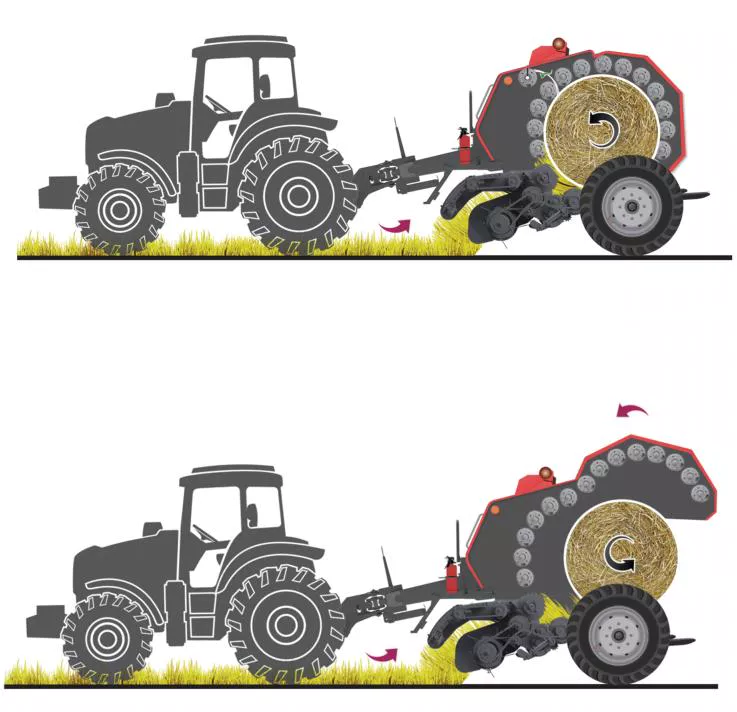
A rice-straw field can look dry on top while lower windrow layers remain damp. Split several windrows and measure representative material before increasing speed, because hidden dampness can turn a normal feed stream into a heavy, ropy slug. In the rice straw baling guide record, place rice straw beside stem toughness. Add the observed result for soil contamination. Mark any moisture, yield, temperature, windrow, or operator change that occurred during the test; otherwise a crop change can be mistaken for a machine effect.
Errors that can mislead rice straw baling guide
- Baling from muddy windrows with pickup teeth scraping soil. Check rice straw before accepting that explanation for rice straw baling guide. Compare stem toughness on the next pass. Use this counter-evidence: Use a windrow that allows the feeder to take a continuous mat rather than thick piles. Tough stems magnify the torque spikes created by feed surges.
- Increasing speed when the feeder is already surging. Check stem toughness before accepting that explanation for rice straw baling guide. Compare soil contamination on the next pass. Use this counter-evidence: Inspect rotor, knives, scrapers and wrapping points frequently for wound material. Remove crop only after stopping, isolating power and following the machine safety procedure.
- Clearing wound straw with the driveline engaged. Check soil contamination before accepting that explanation for rice straw baling guide. Compare abrasive wear on the next pass. Use this counter-evidence: Watch chain, sprocket, bearing and pickup wear because silica-rich dust and soil contamination can accelerate abrasion.
- Ignoring the effect of residue weight on loader capacity. Check abrasive wear before accepting that explanation for rice straw baling guide. Compare feeding rotor on the next pass. Use this counter-evidence: Verify finished bale integrity before moving across rough field surfaces; damp residue may form heavy bales that challenge loader and transport capacity.
Frequently asked questions on rice straw baling guide
Why is rice straw harder to feed than dry grass hay?
Long tough stems can bridge, rope and wrap around rotating components, especially when damp. Uniform windrows and a feeder suited to tough residue are important. For rice straw baling guide, verify numeric limits affecting soil contamination in the exact machine manual or written supplier specification.
What wears fastest in abrasive residue?
Wear varies by machine, but pickup teeth, chains, sprockets, knife edges, scrapers and exposed bearings deserve close inspection when soil and silica-rich dust are present. For rice straw baling guide, verify numeric limits affecting abrasive wear in the exact machine manual or written supplier specification.
Can damp rice straw be baled for dry storage?
Dry-hay storage requires moisture low enough to avoid heating and mold. If moisture is too high for the intended storage method, delay baling or use an approved high-moisture preservation system. For rice straw baling guide, verify numeric limits affecting feeding rotor in the exact machine manual or written supplier specification.
Field confirmation for rice straw baling guide
Finish the rice straw baling guide decision with a short evidence chain. Record rice straw. Cross-check stem toughness. Confirm the outcome through soil contamination. If those observations conflict, return to abrasive wear before raising speed, density, workload, or purchase commitment. If the unresolved item is model-specific, request the documented value for feeding rotor instead of estimating it.