
Variables and units — calculate hay baler field capacity
Calculate baler capacity as area, crop mass and finished bales per hour, then account for turns, wrapping, ejection and logistics to identify the true bottleneck.
A calculation is only as reliable as its units and field inputs. For calculate hay baler field capacity, start with field capacity; cross-check acres per hour; then verify bales per hour. Those three observations prevent a single attractive feature or symptom from controlling the whole decision.
The exact calculate hay baler field capacity limit can depend on machine model, crop, region, or operating configuration. Check the baler manual for values tied to field efficiency. Ask the supplier for written data tied to crop yield. Use field evidence for field capacity. This separation keeps documented facts distinct from assumptions.
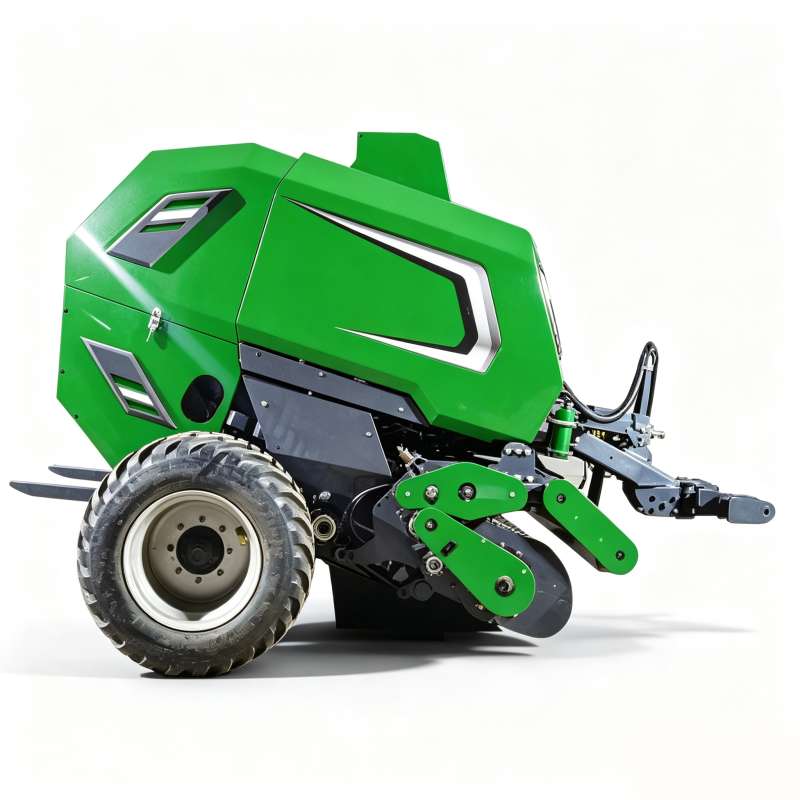
Calculation path for calculate hay baler field capacity
Field Capacity
For area-based work, effective field capacity in acres per hour can be estimated as working width in feet × travel speed in mph × field efficiency ÷ 8.25. Use actual effective pickup or swath width, not transport width. Link field capacity with acres per hour during the first field check for calculate hay baler field capacity.
Acres Per Hour
Field efficiency is the fraction of clock time spent doing productive field work. Turns, stops, wrapping, ejection, plugging, adjustments and waiting reduce it below the theoretical travel calculation. Link acres per hour with bales per hour during the first field check for calculate hay baler field capacity.
Bales Per Hour
For a baler, mass throughput is often more useful than acres per hour because crop yield varies. Multiply effective acres per hour by dry or as-harvest yield per acre using consistent mass and moisture basis. Link bales per hour with field efficiency during the first field check for calculate hay baler field capacity.
For area-based work, effective field capacity in acres per hour can be estimated as working width in feet × travel speed in mph × field efficiency ÷ 8.25. Use actual effective pickup or swath width, not transport width. For calculate hay baler field capacity, inspect field capacity beside acres per hour. Record field efficiency during that same pass. The “Area capacity” condition matters: Width × speed × field efficiency ÷ 8.25. Use the action “Useful for field scheduling” as the next check, not as an automatic setting. A misleading shortcut is entering field efficiency as 70 instead of 0.70. Test that shortcut against field capacity before accepting it. Field efficiency is the fraction of clock time spent doing productive field work. Turns, stops, wrapping, ejection, plugging, adjustments and waiting reduce it below the theoretical travel calculation. Recheck acres per hour after the correction. Keep field efficiency in the same record so crop change does not masquerade as machine improvement.
For a baler, mass throughput is often more useful than acres per hour because crop yield varies. Multiply effective acres per hour by dry or as-harvest yield per acre using consistent mass and moisture basis. The calculate hay baler field capacity test should connect field efficiency, crop yield, and acres per hour. Measure or inspect field efficiency first. Then compare crop yield under the same crop load. For “Area capacity,” the field meaning is width × speed × field efficiency ÷ 8.25. The practical response is “Useful for field scheduling.” Avoid quoting bales per hour without stating bale mass and crop yield, because it can change the symptom without proving the cause. Bales per hour equals mass throughput divided by representative bale mass when bale weight is measured under similar crop conditions. When the next bale is complete, review acres per hour. A repeatable result should show the same direction on another representative pass.
Field efficiency is the fraction of clock time spent doing productive field work. Turns, stops, wrapping, ejection, plugging, adjustments and waiting reduce it below the theoretical travel calculation. The calculate hay baler field capacity test should connect bales per hour, field efficiency, and field capacity. Measure or inspect bales per hour first. Then compare field efficiency under the same crop load. For “Bale capacity,” the field meaning is mass/hour ÷ representative bale mass. The practical response is “Useful for handling and consumables.” Avoid ignoring wrap and bale-ejection time in field efficiency, because it can change the symptom without proving the cause. For a baler, mass throughput is often more useful than acres per hour because crop yield varies. Multiply effective acres per hour by dry or as-harvest yield per acre using consistent mass and moisture basis. When the next bale is complete, review field capacity. A repeatable result should show the same direction on another representative pass.
Bales per hour equals mass throughput divided by representative bale mass when bale weight is measured under similar crop conditions. Use field capacity as evidence for calculate hay baler field capacity; use acres per hour as a cross-check. Add field efficiency so the record contains crop, machine, and output information. The row “Bale capacity” describes a useful boundary because mass/hour ÷ representative bale mass. Follow “Useful for handling and consumables” only after that boundary is observed. Do not rely on using transport width instead of effective crop-gathering width. Observe downstream handling. A fast chamber does not raise system output if the loader, wrapper, wagons or truck fleet make the baler wait. If field capacity improves while acres per hour worsens, the adjustment has shifted the problem. Repeat the check before increasing production pace.
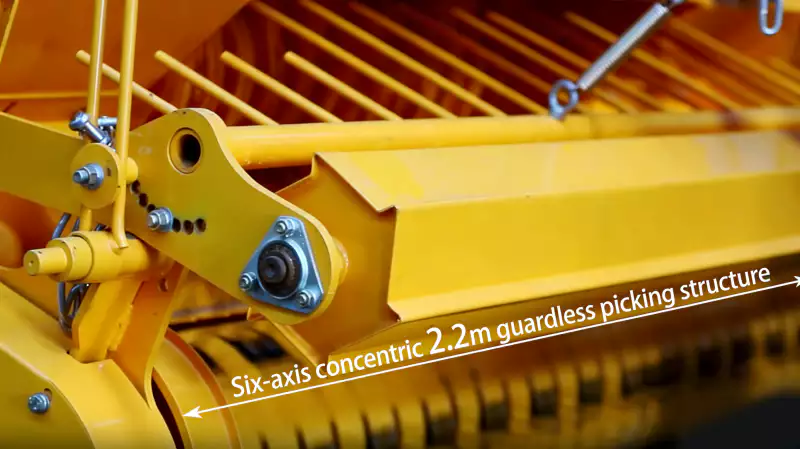
Measurement record for calculate hay baler field capacity
- field capacity
- Record field capacity for calculate hay baler field capacity. Pair it with “Area capacity,” where width × speed × field efficiency ÷ 8.25. The related verification is: Bales per hour equals mass throughput divided by representative bale mass when bale weight is measured under similar crop conditions.
- acres per hour
- Record acres per hour for calculate hay baler field capacity. Pair it with “Mass capacity,” where effective acres/hour × crop yield. The related verification is: Observe downstream handling. A fast chamber does not raise system output if the loader, wrapper, wagons or truck fleet make the baler wait.
- bales per hour
- Record bales per hour for calculate hay baler field capacity. Pair it with “Bale capacity,” where mass/hour ÷ representative bale mass. The related verification is: Run the calculation for several representative fields rather than one ideal pass, because field shape, windrow density and travel distance change practical efficiency.
- field efficiency
- Record field efficiency for calculate hay baler field capacity. Pair it with “Area capacity,” where width × speed × field efficiency ÷ 8.25. The related verification is: For area-based work, effective field capacity in acres per hour can be estimated as working width in feet × travel speed in mph × field efficiency ÷ 8.25. Use actual effective pickup or swath width, not transport width.
- crop yield
- Record crop yield for calculate hay baler field capacity. Pair it with “Mass capacity,” where effective acres/hour × crop yield. The related verification is: Field efficiency is the fraction of clock time spent doing productive field work. Turns, stops, wrapping, ejection, plugging, adjustments and waiting reduce it below the theoretical travel calculation.
Decision matrix for calculate hay baler field capacity
| Condition | Meaning | Verification action |
|---|---|---|
| Area capacity | Width × speed × field efficiency ÷ 8.25 | Useful for field scheduling; Use effective width and decimal efficiency |
| Mass capacity | Effective acres/hour × crop yield | Links machine output to crop volume; Keep moisture basis consistent |
| Bale capacity | Mass/hour ÷ representative bale mass | Useful for handling and consumables; Use measured bale weights |
| Release | Accept the calculate hay baler field capacity result when field capacity, acres per hour, and bales per hour support the same conclusion. | |
Six-step field sequence for calculate hay baler field capacity
- Step 1 — Baseline. For area-based work, effective field capacity in acres per hour can be estimated as working width in feet × travel speed in mph × field efficiency ÷ 8.25. Use actual effective pickup or swath width, not transport width. Write field capacity for calculate hay baler field capacity. Add crop condition and bales per hour. Keep this record before adjustments.
- Step 2 — Locate. Field efficiency is the fraction of clock time spent doing productive field work. Turns, stops, wrapping, ejection, plugging, adjustments and waiting reduce it below the theoretical travel calculation. Find the component or field point tied to acres per hour. Compare it with “Mass capacity,” because effective acres/hour × crop yield.
- Step 3 — Measure. For a baler, mass throughput is often more useful than acres per hour because crop yield varies. Multiply effective acres per hour by dry or as-harvest yield per acre using consistent mass and moisture basis. Use a suitable measurement or inspection for bales per hour. Keep crop yield in the same pass so the comparison stays valid.
- Step 4 — Test. Bales per hour equals mass throughput divided by representative bale mass when bale weight is measured under similar crop conditions. Make one calculate hay baler field capacity change tied to field efficiency. Do not combine it with quoting bales per hour without stating bale mass and crop yield. Observe the next bale.
- Step 5 — Correct. Observe downstream handling. A fast chamber does not raise system output if the loader, wrapper, wagons or truck fleet make the baler wait. Apply “Links machine output to crop volume” when the evidence supports it. Recheck acres per hour; keep other settings unchanged when practical.
- Step 6 — Release. Run the calculation for several representative fields rather than one ideal pass, because field shape, windrow density and travel distance change practical efficiency. Release calculate hay baler field capacity to normal work only after field capacity and bales per hour agree with the finished result. Save the record.
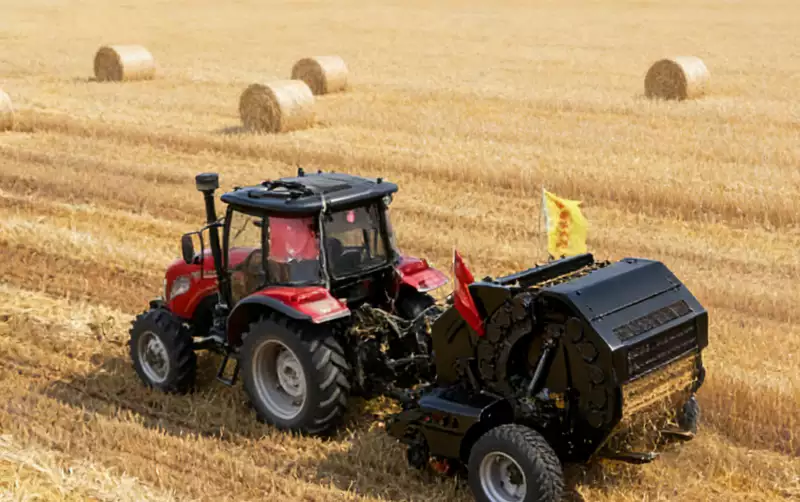
Worked example for calculate hay baler field capacity
With a 6 ft effective pickup width, 5 mph travel speed and 0.70 field efficiency, effective field capacity is about 6 × 5 × 0.70 ÷ 8.25 = 2.55 acres/hour. At 2 tons/acre as-harvest yield, that is about 5.1 tons/hour before any separate moisture correction or downstream bottleneck. In the calculate hay baler field capacity record, place field capacity beside acres per hour. Add the observed result for bales per hour. Mark any moisture, yield, temperature, windrow, or operator change that occurred during the test; otherwise a crop change can be mistaken for a machine effect.
Errors that can mislead calculate hay baler field capacity
- Entering field efficiency as 70 instead of 0.70. Check field capacity before accepting that explanation for calculate hay baler field capacity. Compare acres per hour on the next pass. Use this counter-evidence: For a baler, mass throughput is often more useful than acres per hour because crop yield varies. Multiply effective acres per hour by dry or as-harvest yield per acre using consistent mass and moisture basis.
- Using transport width instead of effective crop-gathering width. Check acres per hour before accepting that explanation for calculate hay baler field capacity. Compare bales per hour on the next pass. Use this counter-evidence: Bales per hour equals mass throughput divided by representative bale mass when bale weight is measured under similar crop conditions.
- Ignoring wrap and bale-ejection time in field efficiency. Check bales per hour before accepting that explanation for calculate hay baler field capacity. Compare field efficiency on the next pass. Use this counter-evidence: Observe downstream handling. A fast chamber does not raise system output if the loader, wrapper, wagons or truck fleet make the baler wait.
- Quoting bales per hour without stating bale mass and crop yield. Check field efficiency before accepting that explanation for calculate hay baler field capacity. Compare crop yield on the next pass. Use this counter-evidence: Run the calculation for several representative fields rather than one ideal pass, because field shape, windrow density and travel distance change practical efficiency.
Frequently asked questions on calculate hay baler field capacity
Why can acres per hour be misleading for a baler?
Two fields can have the same acres but very different forage mass. Tons per hour and bales per hour reveal the crop load that the pickup, feeder and chamber actually process. For calculate hay baler field capacity, verify numeric limits affecting bales per hour in the exact machine manual or written supplier specification.
How should I measure field efficiency?
Record total time and productive baling time over representative fields, including turns, binding, ejection and normal interruptions. Productive time divided by total field time gives a practical efficiency factor. For calculate hay baler field capacity, verify numeric limits affecting field efficiency in the exact machine manual or written supplier specification.
What is the most common system bottleneck?
It varies. Chamber cycle, crop feed, wrapping, field turns, bale collection, wrapping after ejection or transport can each become limiting. Time each stage rather than assuming the baler itself is slow. For calculate hay baler field capacity, verify numeric limits affecting crop yield in the exact machine manual or written supplier specification.
Engineering meaning for calculate hay baler field capacity
Finish the calculate hay baler field capacity decision with a short evidence chain. Record field capacity. Cross-check acres per hour. Confirm the outcome through bales per hour. If those observations conflict, return to field efficiency before raising speed, density, workload, or purchase commitment. If the unresolved item is model-specific, request the documented value for crop yield instead of estimating it.