Agricultural Round Baler for Wet Crops is written for baleage and silage operators who need to match feeding, chamber, bearings, scraping and wrapping capability to heavier moist forage. This topic matters because small setup choices can influence crop loss, chamber load, bale shape, wrapping reliability and downtime at the same time. The central risk is using a dry-hay setup in heavy wet forage without checking machine approval and preservation requirements. Instead, build the decision around four evidence points: crop mass, crop adhesion, density and oxygen exclusion, timing.
This guide treats wet-crop and baleage baling as part of the complete round-baling process. Crop preparation affects the pickup; feeding affects chamber load; chamber behavior affects bale shape and density; wrapping affects handling and storage; tractor and driveline condition affect how much usable capacity is available. Looking at those relationships makes the advice more portable across brands and field conditions.
The recommendations below deliberately avoid invented performance or price claims. Where a model example is useful, the article points to a current Agricultural-Baler.com product page and treats its published specification as model-specific. For safety, settings, parts and maintenance limits, the manual for the exact machine remains the controlling source.
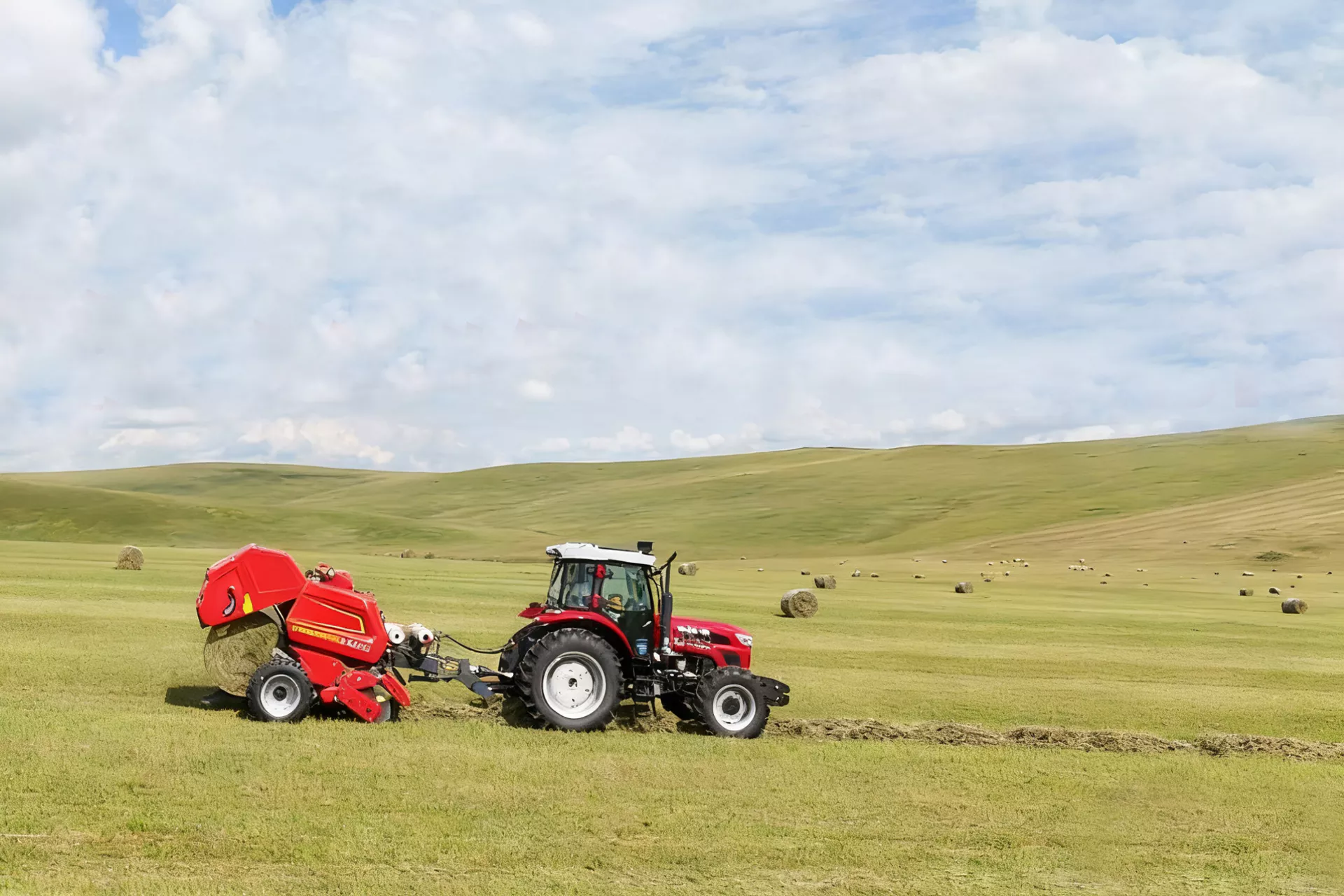
Field reference for round baler for Wet Crops.
Build the Right Baseline
Core Decision: The practical objective is to match feeding, chamber, bearings, scraping and wrapping capability to heavier moist forage. The decision should be supported by four checks: crop mass, crop adhesion, density and oxygen exclusion, timing.
A technically correct adjustment made on an empty machine can still perform poorly under a dense windrow. Final validation therefore has to occur at representative load and should include several consecutive bales.
⚙️ Decision Variables at a Glance
V1 — Crop massWhy it matters: Wet forage is heavier and can raise driveline, feeder, bearing and tractor load for a given volume.V2 — Crop adhesionWhy it matters: Moist material can stick to rollers, belts, scrapers and feeder surfaces, increasing the importance of cleaning and crop-specific design.V3 — Density and oxygen exclusionWhy it matters: Baleage depends on forming a dense package and quickly applying an appropriate oxygen-limiting wrap system.V4 — TimingWhy it matters: Baling and wrapping must be coordinated so high-moisture bales are not left exposed for unnecessary periods.
Quick-Scan Card Grid
At-a-Glance Decision Grid
Decision Card A
⚙️ Decision Card B
Crop mass Why it matters: Wet forage is heavier and can raise driveline, feeder, bearing and tractor load for a given volume. Crop adhesion Why it matters: Moist material can stick to rollers, belts, scrapers and feeder surfaces, increasing the importance of cleaning and crop-specific design.
Density and oxygen exclusion Why it matters: Baleage depends on forming a dense package and quickly applying an appropriate oxygen-limiting wrap system. Timing Why it matters: Baling and wrapping must be coordinated so high-moisture bales are not left exposed for unnecessary periods.
Use these four cards as a scan-first checklist, then verify exact model values in the manual or written supplier documentation.
⚙️ 1. Crop mass
Wet forage is heavier and can raise driveline, feeder, bearing and tractor load for a given volume. This topic matters because small setup choices can influence crop loss, chamber load, bale shape, wrapping reliability and downtime at the same time. In the context of wet-crop and baleage baling, crop mass can change chamber resistance, bale rotation and power transfer. That is why the item should be discussed in terms of the required result, not only whether a component or feature is present. A buyer should ask what range is supported, and an operator should know what a normal result looks like before attempting to optimize it.
A practical assessment is to photograph the setup and note the exact model, tractor, PTO configuration and field condition so the observation can be repeated. Then compare the observation with crop adhesion and density and oxygen exclusion, because those factors can interact. If the result improves only when another condition changes, the original factor may be a symptom rather than the primary cause. This is especially important in baling because the crop itself is variable: stem length, moisture, density and windrow uniformity can all change the mechanical load from one field section to the next.
The operator should know which symptoms mean “adjust the setup” and which mean “stop and inspect the machine.” For baleage and silage operators, the decision record should include the exact machine model, the relevant setting or component, the crop condition and what happened to bale quality or machine behavior. When a supplier recommendation is needed, send that evidence with the question. A precise field description normally produces a better answer than a general statement such as “the baler does not work well.”
Visual reference for crop mass in round baler for Wet Crops.
⚙️ 2. Crop adhesion
Moist material can stick to rollers, belts, scrapers and feeder surfaces, increasing the importance of cleaning and crop-specific design. A round baler should be evaluated as part of a harvest chain that includes cutting, windrowing, tractor power, binding, handling and storage. In the context of wet-crop and baleage baling, crop adhesion can change sensor feedback, control response and operator adjustment. That is why the item should be discussed in terms of the required result, not only whether a component or feature is present. A buyer should ask what range is supported, and an operator should know what a normal result looks like before attempting to optimize it.
A practical assessment is to verify sensor or monitor information against a second observation method before treating the reading as a control target. Then compare the observation with crop mass and density and oxygen exclusion, because those factors can interact. If the result improves only when another condition changes, the original factor may be a symptom rather than the primary cause. This is especially important in baling because the crop itself is variable: stem length, moisture, density and windrow uniformity can all change the mechanical load from one field section to the next.
More capacity is not automatically better if the change narrows the operating margin and causes plugging, heat or repeated protective-device trips. For baleage and silage operators, the decision record should include the exact machine model, the relevant setting or component, the crop condition and what happened to bale quality or machine behavior. When a supplier recommendation is needed, send that evidence with the question. A precise field description normally produces a better answer than a general statement such as “the baler does not work well.”
Visual reference for crop adhesion in round baler for Wet Crops.
⚙️ 3. Density and oxygen exclusion
Baleage depends on forming a dense package and quickly applying an appropriate oxygen-limiting wrap system. For procurement and operation, the important distinction is between a feature that sounds attractive and a requirement that can be measured in the field. In the context of wet-crop and baleage baling, density and oxygen exclusion can change wrap timing, bale surface condition and ejection sequence. That is why the item should be discussed in terms of the required result, not only whether a component or feature is present. A buyer should ask what range is supported, and an operator should know what a normal result looks like before attempting to optimize it.
A practical assessment is to request a written model-specific value from the supplier whenever the manual, decal or machine configuration appears inconsistent. Then compare the observation with crop mass and crop adhesion, because those factors can interact. If the result improves only when another condition changes, the original factor may be a symptom rather than the primary cause. This is especially important in baling because the crop itself is variable: stem length, moisture, density and windrow uniformity can all change the mechanical load from one field section to the next.
Any recommendation that changes guarding, overload protection or manufacturer limits should be rejected unless formally approved for the exact machine. For baleage and silage operators, the decision record should include the exact machine model, the relevant setting or component, the crop condition and what happened to bale quality or machine behavior. When a supplier recommendation is needed, send that evidence with the question. A precise field description normally produces a better answer than a general statement such as “the baler does not work well.”
Visual reference for density and oxygen exclusion in round baler for Wet Crops.
⚙️ 4. Timing
Baling and wrapping must be coordinated so high-moisture bales are not left exposed for unnecessary periods. A useful way to approach this subject is to begin with the result the farm needs and then work backward through crop flow, tractor interface and machine setup. In the context of wet-crop and baleage baling, timing can change bearing load, belt or roller behavior and driveline torque. That is why the item should be discussed in terms of the required result, not only whether a component or feature is present. A buyer should ask what range is supported, and an operator should know what a normal result looks like before attempting to optimize it.
A practical assessment is to use a simple before-and-after record instead of relying on memory after several settings have been changed. Then compare the observation with crop mass and crop adhesion, because those factors can interact. If the result improves only when another condition changes, the original factor may be a symptom rather than the primary cause. This is especially important in baling because the crop itself is variable: stem length, moisture, density and windrow uniformity can all change the mechanical load from one field section to the next.
A useful field rule is to protect consistency first, then optimize speed after the crop is feeding evenly and the machine is stable. For baleage and silage operators, the decision record should include the exact machine model, the relevant setting or component, the crop condition and what happened to bale quality or machine behavior. When a supplier recommendation is needed, send that evidence with the question. A precise field description normally produces a better answer than a general statement such as “the baler does not work well.”
Visual reference for timing in round baler for Wet Crops.
Comparison Worksheet
Comparison Worksheet — practical comparison matrix
Decision point
Topic-specific meaning
Baseline
Verification
Crop mass
Wet forage is heavier and can raise driveline, feeder, bearing and tractor load for a given volume.
Record the current condition and the desired result.
Verify with a measurement, manual value, supplier confirmation or repeated field observation.
Crop adhesion
Moist material can stick to rollers, belts, scrapers and feeder surfaces, increasing the importance of cleaning and crop-specific design.
Record the current condition and the desired result.
Verify with a measurement, manual value, supplier confirmation or repeated field observation.
Density and oxygen exclusion
Baleage depends on forming a dense package and quickly applying an appropriate oxygen-limiting wrap system.
Record the current condition and the desired result.
Verify with a measurement, manual value, supplier confirmation or repeated field observation.
Timing
Baling and wrapping must be coordinated so high-moisture bales are not left exposed for unnecessary periods.
Record the current condition and the desired result.
Verify with a measurement, manual value, supplier confirmation or repeated field observation.
Use model-specific manual values and written supplier confirmation before final purchase, setup or service decisions.
Round baler comparison image for round baler for Wet Crops.
How to Turn the Topic Into a Working Procedure Suppose a monitor shows a change at the same time the operator notices more steering correction. The useful diagnosis connects the electronic indication with windrow distribution and actual bale shape instead of treating the display as a separate problem.
⚠️ Document — Confirm the exact model and manual baseline. Photograph the setup and note the exact model, tractor, pto configuration and field condition so the observation can be repeated. Keep the step specific to the exact machine and stop if the procedure requires bypassing a guard, exceeding a limit or entering an unsupported area.
⚠️ Confirm — Inspect crop and windrow conditions. Separate the field into a representative test area so one adjustment can be evaluated without changing crop conditions too much. Keep the step specific to the exact machine and stop if the procedure requires bypassing a guard, exceeding a limit or entering an unsupported area.
⚠️ Observe — Record current settings before adjustment. Measure the tractor and implement interface physically when hitch geometry, pto shaft length or transport clearance is involved. Keep the step specific to the exact machine and stop if the procedure requires bypassing a guard, exceeding a limit or entering an unsupported area.
⚠️ Measure — Change one variable at a time. Compare several consecutive bales and record dimensions, shape, wrap result and any relevant monitor values. Keep the step specific to the exact machine and stop if the procedure requires bypassing a guard, exceeding a limit or entering an unsupported area.
⚠️ Compare — Measure the resulting bale or machine response. Check the same component at cold start and after reaching working temperature, while following the service procedure. Keep the step specific to the exact machine and stop if the procedure requires bypassing a guard, exceeding a limit or entering an unsupported area.
⚠️ Correct — Repeat under representative field load. Keep bale count, consumable use and downtime notes so a seasonal decision can be based on more than peak bales per hour. Keep the step specific to the exact machine and stop if the procedure requires bypassing a guard, exceeding a limit or entering an unsupported area.
⚠️ Record — Document the final working setup. Write down the crop, moisture condition, windrow width and travel speed before changing the machine. Keep the step specific to the exact machine and stop if the procedure requires bypassing a guard, exceeding a limit or entering an unsupported area.
The purpose of the sequence is traceability. If the next bale is better, you know which change probably contributed. If it is worse, you can return to the previous baseline. This is faster than making several simultaneous adjustments and then trying to reconstruct which one mattered.
Operating image for round baler for Wet Crops.
⚠️ Four Shortcuts That Create Expensive Problems
⚠️ Safety Warning: Stop the tractor and isolate PTO, hydraulic and stored energy before clearing, adjusting or inspecting moving components. Do not bypass guards, replace overload protection with unauthorized hardware, or exceed the exact machine manual limits.
Using a dry-hay setup in heavy wet forage without checking machine approval and preservation requirements
Replace that shortcut with a written check of crop mass and crop adhesion. More capacity is not automatically better if the change narrows the operating margin and causes plugging, heat or repeated protective-device trips.
Ignoring density and oxygen exclusion
Baleage depends on forming a dense package and quickly applying an appropriate oxygen-limiting wrap system. Treat it as a planned check instead of something to revisit only after performance falls. A procurement specification should state both the desired outcome and the condition under which that outcome is expected.
Changing several variables together
Change one setting or condition, make a representative group of bales, and compare the result with the baseline. If two options can meet the same bale requirement, service access and parts availability may be the more valuable differentiator.
Continuing after a safety or overload warning
Stop, isolate energy and investigate the cause. Do not install stronger unauthorized protective hardware or defeat guarding to keep working. The operator should know which symptoms mean “adjust the setup” and which mean “stop and inspect the machine.”
Maintenance and inspection context for round baler for Wet Crops.
Using Current Product Pages Without Overgeneralizing For a technical reference, compare the 9YG-1.25A product page with the S9000 Classic product page . Both publish roller-based bale formation and sensor-controlled density, yet their pickup and power information differs. That is a useful reminder to verify the exact model before transferring settings or expectations.
✅ Key Takeaways
✅ Primary goal: match feeding, chamber, bearings, scraping and wrapping capability to heavier moist forage.
✅ Main risk: avoid using a dry-hay setup in heavy wet forage without checking machine approval and preservation requirements.
✅ Measure: Crop mass, Crop adhesion, Density and oxygen exclusion and Timing.
✅ Safety: stop and isolate power before clearing, adjusting or inspecting moving parts.
✅ Model control: use exact manual values and written supplier confirmation for final settings and parts.
Final field application image for round baler for Wet Crops.
Request a Project-Specific Recommendation
For a commercial quotation or technical recommendation, prepare the crop type, expected moisture range, tractor horsepower and PTO specification, field terrain, target bale size, binding preference and estimated annual bale count. Review the Round Baler product range and send the requirement through the contact page . That information allows the supplier to discuss a machine configuration instead of guessing from a general inquiry.
Product application reference for round baler for Wet Crops.
Frequently Asked Questions
What should I check first about round baler for Wet Crops? Start with crop mass. Wet forage is heavier and can raise driveline, feeder, bearing and tractor load for a given volume. Then verify tractor compatibility and the required finished bale before optimizing speed or adding options.
How can I verify crop adhesion in the field? Use a simple before-and-after record instead of relying on memory after several settings have been changed. Use several bales or a representative section of the field so one unusual windrow does not control the conclusion.
How does density and oxygen exclusion change the decision? Baleage depends on forming a dense package and quickly applying an appropriate oxygen-limiting wrap system. It should be considered together with timing because the two can affect capacity, handling, maintenance or support in different ways.
When should the machine be stopped instead of adjusted? Stop when there is abnormal heat, smoke, a new severe vibration or noise, repeated protective-device operation, a damaged guard, a hydraulic or structural concern, or any situation that requires approaching moving parts. Follow the manual before inspection.
Where should I go for a model-specific recommendation? Compare the current range at Agricultural-Baler.com, then send the supplier the crop, moisture condition, tractor and PTO information, terrain, desired bale size and annual volume. Ask for a written configuration recommendation for the exact model.
References and Further Reading These references provide independent forage, equipment, safety or current-technology context. They do not replace the manual and safety instructions for the exact baler, tractor or wrapper used in your operation.